
Blog
A practical guide for buyers comparing industrial gumboots by the visible height and toe-option information, work environment and size run.
Home / Journal /
–
SafetyFRST Editorial Team
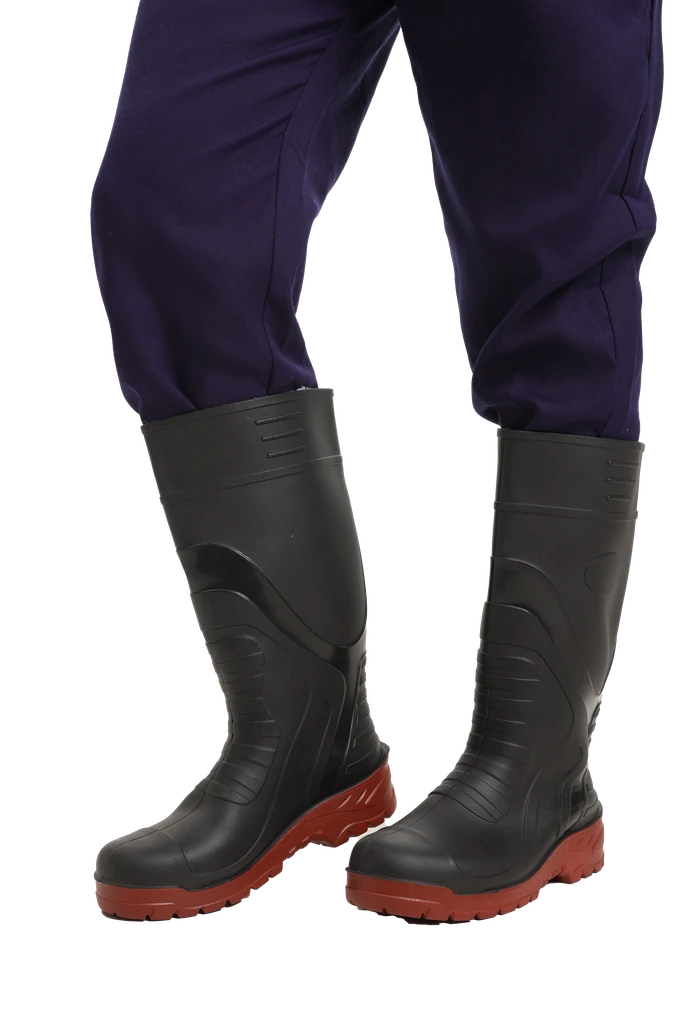
Industrial gumboot selection should start with the work environment and the exact protection specification required. Use the product page’s visible height and toe-option information as the basis for your brief.
Ask buyers to confirm the environment, size run and exact protection specification before requesting a quote. Do not assume a rating or certification; confirm it for the selected product where required.
For wet or outdoor work, compare gumboots with the related rainwear options and specify the expected exposure and quantities.
Specify gumboots from the coverage and protection requirement, not from a generic product label. The visible SafetyFRST options include 8-inch, 11-inch and 15-inch heights, with plain and steel-toe choices available; select among them only after the environment, fit and exact requirement are clear.
How to brief industrial gumboots
Record where users work, what coverage they need, whether socks or other layers affect fit, and how boots will be cleaned and stored. This prevents an otherwise simple size request from overlooking the daily issuing and care process.
Compare options without generic assumptions
Use the visible 8-inch, 11-inch and 15-inch heights and the plain or steel-toe choices as the starting comparison. Do not infer material compounds, ratings or standards; confirm the exact protection specification for the selected item.
Keep the comparison evidence-based
Review Industrial Gumboots and related PVC rainwear when the work involves wet or outdoor conditions. Capture the exact product name, intended user, coverage or fit requirement and any requirement supplied by a customer, employer or site. Avoid adding performance claims, standards or ratings that have not been confirmed for the selected item.
Begin with the operating brief
Before comparing products, speak with the people who issue, wear and supervise the equipment. Ask what a normal shift involves, where movement happens, how items are stored, whether teams share stock and what has caused friction with earlier purchases. A concise operating brief gives procurement a better basis for comparison than a product name alone.
Turn the task into buying criteria
Separate the non-negotiable requirement from preferences. The non-negotiable requirement may be the intended task, coverage, compatibility, fit range, quantity or an exact specification that a client or employer has asked to confirm. Preferences may include appearance, branding, pocket arrangement or how the item is issued. Writing both down makes approvals easier to document.
Use a workforce sample before a full roll-out
For team orders, ask a small cross-section of intended wearers and supervisors to review the proposed option against the real workday. Confirm sizing, range of movement, layering or companion equipment, and whether the wording in the purchase request matches what is actually needed. Record the outcome so later reorders use the same approved brief.
Structured decision checklist
1. Task and environment: describe the work, location, shift pattern and expected exposure. 2. Wearer profile: record user group, size range, fit or coverage needs and companion equipment. 3. Product decision: name the exact option being considered and the required specification to confirm. 4. Order plan: state quantities, sample approval route, allocation method and branding needs. 5. Follow-up: record inspection, care, storage and reorder ownership.
Create a quote-ready procurement brief
Copy this into a quote request: “We need [product category] for [team and task] in [environment]. The expected exposure or operating condition is [detail]. We need [coverage, fit, size run or companion-PPE requirement]. Please quote the exact option that meets [specification to confirm], for [quantity], with [branding, packing or allocation detail]. Please confirm suitability and certification for the exact item and use case.”
Sampling, approval and ordering
Treat a quote as the start of an approval trail, not the end of the specification. Keep the requested option, size information, artwork where relevant, sample feedback, final quantity and delivery allocation together. This helps site teams, procurement and suppliers work from the same version of the requirement and makes later reorders easier to govern.
Frequently asked questions
What information should a quote request include?
Include the task, environment, user group, quantity, size or fit needs, any coverage or compatibility requirement, branding needs and the exact product specification to confirm.
Should we select from a category name alone?
No. Use the category to find relevant options, then compare them against the intended task and the exact item requirement.
How should we handle team sizing and allocation?
Collect size data early, identify exceptional fit needs and decide whether items will be individually allocated, held as site stock or issued by role.
What should we confirm before ordering?
Confirm the approved option, sample or review outcome where relevant, quantity, branding details, delivery allocation and the exact specification required for the chosen item.
Final reminder
Product certification and suitability vary by exact item and use case and must be confirmed before selection or ordering. This guide is a procurement planning aid, not a legal or safety guarantee.
Fit, socks and storage briefing
Ask wearers what socks or layers are normally used and collect the full size run before ordering. Try the proposed height and toe choice against the movement and coverage needed for the actual work area, then document how boots will be issued, cleaned and stored between shifts. An allocation record and a simple return or replacement route help teams avoid treating a range of distinct fit needs as one generic boot size.
Review the relevant SafetyFRST product page or contact the SafetyFRST team for help preparing the brief.
Keep the selected height, toe choice, size run and item-specific requirement in the final brief so issue and reorder decisions remain consistent.
Need help specifying gear for your team?
Share your team’s task, environment, quantities and exact requirement for a practical starting point.